
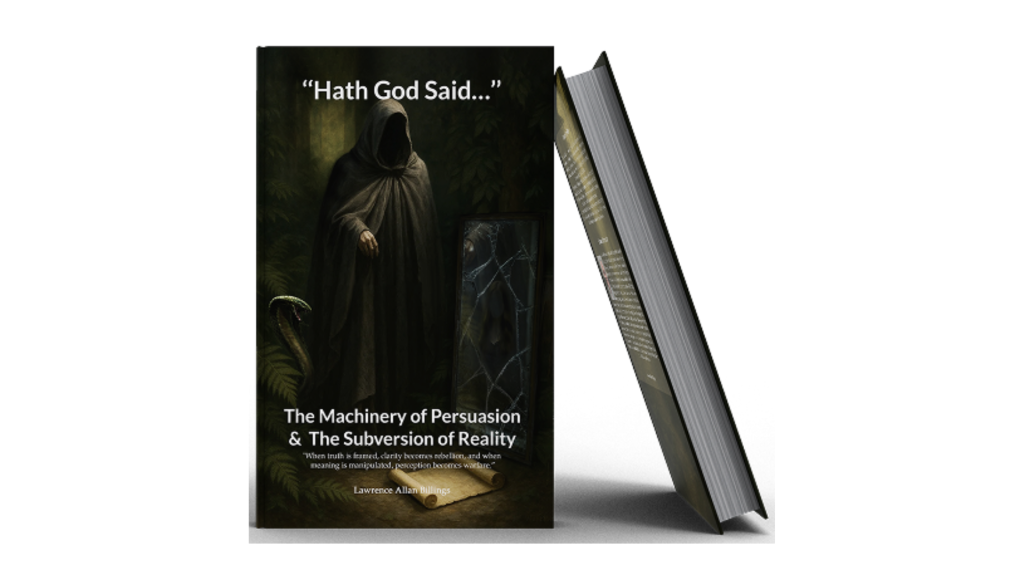
Today’s rapid digital landscape leaves many hunting for clear answers, purpose, and guidance. Because of this shift, persuasion books have become key tools in grasping how influence spreads through speech and interaction. Ideas move across societies in quiet but powerful ways these texts expose those routes. Some messages stick; others fade why that happens is often uncovered within their pages. Hidden rhythms in current thought? They’re easier to spot after reading such material. From Lawrence Allan Billings comes Hath God Said., a close look at what we accept as real, why we believe it, and how sight itself can deceive. What if reading could shift how we see truth? His writing pushes people to rethink where their views come from.
How Persuasion Books Show Influence
Starting with awareness marks the beginning of examining influence, while many writings on persuasion books describe the way ideas emerge prior to choices being made. Quietly steering belief structures through words is a point Lawrence Allan Billings emphasizes. Without using obvious pressure, small shifts in communication alter perception this idea appears clearly in his work. His examples reveal how meaning transforms gradually, guided by phrasing rather than command. Emotional cues shape how messages land, sometimes more than raw data. Spotting such signals at the start helps make sense of intent. With quiet insight, Billings ties this skill to thoughtful pause urging attention beneath what is first seen.
Halfway along this path, guides on influence offer a clear way to see how facts bend under steady restatement and vocal nuance. Because of this, people start noticing not just claims, but the manner behind them. With time, such attention sharpens judgment in routine choices. Books about influence offer insight into how thoughts spread across communities while affecting individual choices. Because of this, Billings’ viewpoint fits naturally, urging people to assess information with care. In time, communication reveals itself not as background noise but as something impactful demanding reflection.
Cultural Messaging And Subtle Influence
Hidden meanings in culture slowly influence what people believe. Through time, these ideas take root without notice. Billings looks at how stories told again and again build shared views. He invites reflection on habits of thought rather than passive acceptance. Questioning familiar cycles becomes a way forward. When culture shapes thinking, some books about persuasion show what stands behind those habits. In much the same way, repeated messages gain power through steady exposure, these texts explain. Awareness grows slowly, especially when people begin noticing patterns in ordinary content.
Additionally, books about persuasion help readers recognize how repetition shapes acceptance over time. Moreover, books about persuasion highlight how cultural narratives quietly guide belief systems, making awareness an essential skill in understanding influence.
Critical Thinking With Persuasion Books
Questioning details instead of taking them at face value sparks sharper thinking. So, do guides about influence they tend to sharpen how people process thoughts. Building from there, Lawrence Allan Billings pushes for closer looks at what we call true and why beliefs take root. What stands out is that his book HATH GOD SAID pushes people to question where their beliefs come from. Because of this, some start seeing just how fast opinions can change. On another note, writings about influence stress checking the motives hidden in what others say.
Seeing How Things Affect Each Other
Because media, schooling, and daily exchanges carry hidden influences, those who examine them tend to sharpen their reasoning skills. Awareness of such dynamics links directly to how people manage their own beliefs Billings emphasizes this point clearly. Thoughtful engagement begins when individuals recognize subtle pressures shaping their views. Most persuasion books focus on repetition, yet they also explore how tone influences perception. Understanding grows when emotion enters the message, not just facts alone. Readers start noticing patterns, mainly because structure reveals intent. These texts help spot motives tucked inside everyday speech. Awareness shifts subtly, especially through repeated exposure to certain phrases. Often, it is the quiet emphasis that signals a deeper aim. Clarity comes not from bold claims but from rhythm and pause. Recognition of strategy emerges over time, rarely at first glance.
Learning How Ideas Spread Through Reading About Influence
Seeing deeper than obvious meanings marks the start of awareness. As a result, books on persuasion support clearer thinking over time. Reflection paired with close attention drives this shift, according to Lawrence Allan Billings. Thinking shifts when communication styles change, shaping what feels believable. As a result, many start recognizing patterns in their own reasoning. Some gain stronger command over choices without even noticing. Through stories about influence, readers uncover structures behind why ideas stick. These guides offer quiet clarity, revealing tools hidden in everyday talk.
Thinking Of Me And Growing
Self-reflection plays a role in understanding influences on perspective. For readers, taking time to pause tends to happen without effort, creating space before accepting ideas too fast. Because insight into one’s own assumptions grows, decision routes can become more transparent, according to Billings. When individuals observe their inner reactions, choices frequently change direction. How someone sees themselves quietly reshapes judgment. At first glance, certain books on persuasion reveal tactics and emotions that distort clear thought. As a result, readers often develop stronger independent reasoning skills. Just like that, understanding how influence operates in daily life sharpens perception over time. Though quiet in approach, they quietly reshape how one sees interactions around them. Additionally, books on persuasion continue to help readers recognize subtle influence patterns that shape everyday thinking and communication.
Conclusion
Persuasion books do not stop at teaching ways to communicate. They open eyes to the quiet power ideas hold over thinking and actions. From page one of HATH GOD SAID., Lawrence Allan Billings invites close attention to what truth means, how words frame it, and why perception shifts so easily. His voice does not shout; instead, it lingers, prompting second thoughts about who influences us and why. When people spend time inside such books, their sense of judgment grows sharper almost without notice. Patterns in speech and messaging start to reveal themselves like hidden threads.
Because of this slow shift, choices made each day begin to reflect a clearer view of where beliefs truly come from. What keeps learners moving forward? Resources centered on persuasive techniques provide clear frameworks for understanding how arguments work. Because of these tools, people build more than just awareness they develop sharper thinking skills, something that matters deeply now, when data shapes so many choices.
